Key takeaways:
- Layout first: Plan the master bedroom around walkways (60–90 cm) so the room has enough space and feels easy daily.
- Storage-led planning: Full-height wardrobe + smart closet zoning + a platform bed creates more space without adding more furniture.
- Light and calm: Maximise natural light with sheers and mirrors, then layer warm light (ambient + task + accent) for a bedroom that feels restful.

Singapore homes—especially hdb flats and bto flats—often have one shared challenge: the bedroom needs to do a lot inside a small room. A great master bedroom isn’t about adding more things; it’s about planning the space so the bed, wardrobe, light, and daily routines fit naturally.
At HŌMU HŌMU, our interior design approach is quietly modern and warm: clean lines, honest wood tones, thoughtful light, and clutter-control storage. If you’re new here, you can start at homuhomu.sg and browse real homes in our portfolio of projects.
For the best hdb bedroom ideas, plan the master bedroom layout first: keep about 60–90 cm of space around the bed and wardrobe for clear walkways. Use a platform bed for hidden storage, go full-height on the wardrobe to maximise vertical space, and keep one feature wall behind the headboard as the focal point. Finish with layered warm light.
Mini index
- Warm minimalism (not cold) for HDB bedrooms
- Layout rules that create more space
- Platform bed choices that make sense
- Wardrobe planning: closet, cupboard, shelves
- Lighting plan: natural light + warm lighting scenes
- Renovation process & timelines (Singapore, HDB/condo/MCST)
1) Warm minimalism for a HDB bedroom (what it actually means)
Warm minimalism is bedroom design that feels uncluttered, not empty. In Singapore interior design terms, it’s clean lines + tactile texture + practical storage + soft, layered light—so the room feels calm and still lived-in.
To keep it cozy, build warmth through light-to-medium wood, gentle fabrics, and a balanced mix of open and closed storage. The goal is a master bedroom that resets your head after a long day, without sounding airy-fairy.
2) Space planning first: the rule-of-thumb that makes sense
Good bedroom design starts with planning the space before choosing colour, wardrobes, or even the bed. In hdb and bto flats, every square metre counts.
A practical rule of thumb: try to maintain about 60 to 90 centimeters of space around key features like the bed and wardrobe. That walkway is what stops the room from feeling squeezed.
If you’re working with a small bedroom, don’t fight the footprint—simplify the layout. Keep the bed and wardrobe on the more solid, uninterrupted walls, then use the remaining space for what you actually do (changing, dressing, winding down).
If you need a “separate room” feeling inside one room, consider a broken-plan move: glass partitions or sliding doors to separate zones while still keeping openness and light.
Quick Win (layout): Replace one bulky bedside table with a slim table or wall-mounted shelf on one wall—instant more space around the bed.
3) Platform bed ideas: hidden storage without extra furniture
A platform bed is popular in a hdb bedroom because it’s a clean, modern base that can carry hidden storage. A platform bed provides hidden storage without adding extra furniture, so you keep the floor space clearer.
If your master bedroom feels short on storage space, a platform bed can hold linens, luggage, or seasonal clothes—without needing another cupboard.
Minimalism-focused bedroom design often pairs platform beds with subtle LED strip lighting for ambience. It’s a quiet upgrade that supports rest, not drama.
Choose a platform bed height that still feels easy to use daily. If drawers are the plan, ensure there’s enough space to open them without fighting the wardrobe doors.
4) Wardrobe planning: full-height storage that keeps the room calm
In most Singapore homes, the wardrobe is the biggest furniture piece in the master bedroom—so it shapes the whole interior feel. Built-in wardrobes maximise vertical space and help keep hdb bedroom storage organised.
Full-height wardrobes make the most of vertical space and are especially useful in a small bedroom. The top zone can store less-frequent items; the middle zone is daily clothes; the lower zone handles drawers and laundry habits.
In compact rooms, sliding wardrobe doors are really practical because they don’t block the passage. This matters more than it sounds—blocked walkways make the room feel tighter instantly.
Inside the closet, mix hanging, drawers, and a few open shelves. Open shelves in cupboards can prevent the room from looking overcrowded while still giving flexible storage.
If your 4 room hdb layout allows it, compact walk-in wardrobes can be created behind the bed using sliding doors. It keeps the master bedroom tidy, and the room still reads clean.
A well-planned layout can make even a smaller room feel comfortable and easy to use. That’s the difference between a bedroom that looks good in a photo, and a bedroom that works on Monday morning.
Quick Win (storage): Add one shallow “charger drawer” near the bed zone so your bedside table stays clear and your room stays calm.

5) Feature wall + headboard: build visual interest with one focal point
A feature wall works best when it’s controlled. In a master bedroom, choose one wall—typically behind the bed—as the focal point, then keep other walls quieter.
Light colours such as soft whites, warm beige, or pale grey make HDB bedrooms feel open and airy. If you like mood, deep and dark tones can create an enveloping atmosphere of drama and elegance—especially when you keep the deeper colour to a single solid wall.
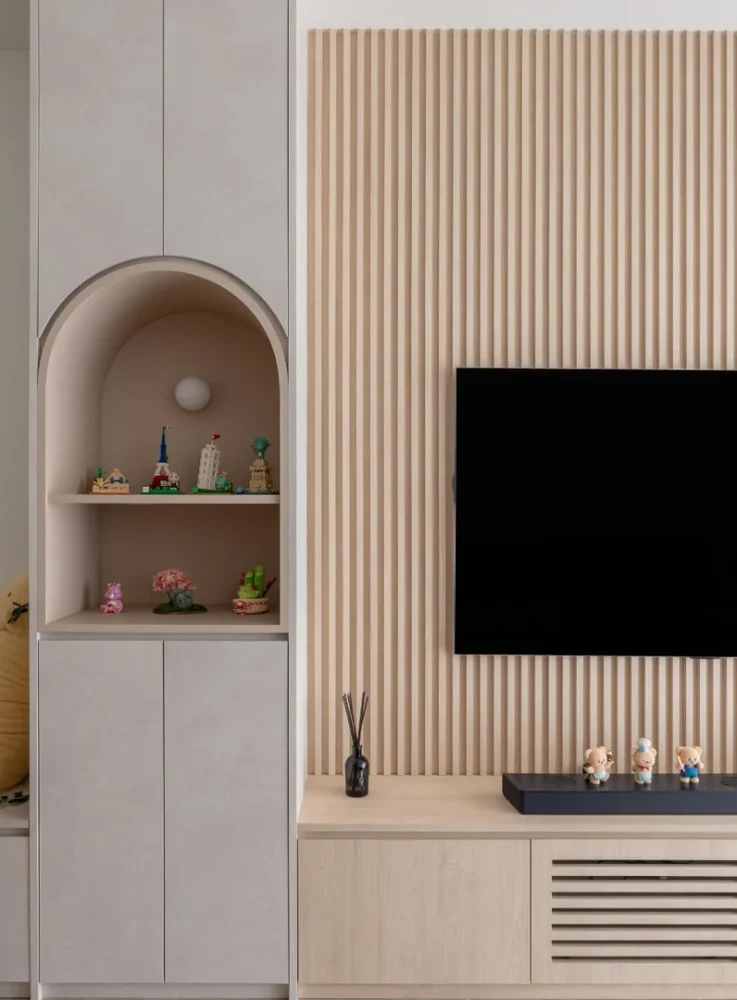
Wood tones add warmth and a cozy feel in the hdb bedroom, especially light to medium wood tones. A wood-backed headboard detail is a practical way to add warmth without clutter.
If you want a “hotel” vibe without luxury flexing, Modern Luxe / hotel style often uses darker, moody tones like charcoal, navy, and deep teal, paired with sculptural light. Done quietly, it still feels grounded.
Keep the feature wall clean and the headboard well-proportioned—this is where the room gets its visual interest without visual noise.

6) Lighting plan: natural light, warm lighting, and layered scenes
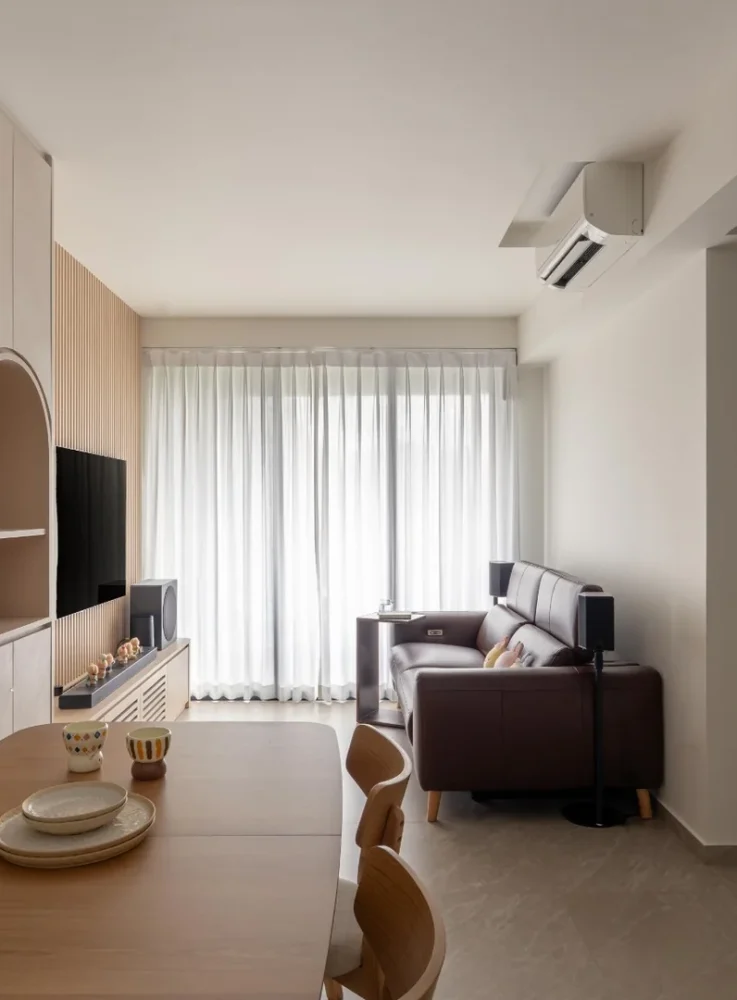
Maximizing natural light enhances the airy feeling in a room. Two simple moves help: sheer curtains over the windows, and mirrors positioned opposite light sources to reflect light around the room, making it feel brighter and larger.
Layered lighting is essential in hdb bedroom planning. Start with general ceiling light, then add bedside task lights, then add accent light (like an LED line under a shelf or behind a headboard) for softer nights.
Recessed lighting provides ambient and general lighting and can create a dramatic effect—especially when it washes one wall gently. It’s not about making the bedroom bright; it’s about making the room feel settled.
Using stylish lighting options can enhance the appearance of the bedroom and complement the colour scheme. Choose shapes that feel calm, not attention-seeking.
For night, warm lighting (around 2700K–3000K) supports rest. For day, rely more on natural light and softer ambient levels so the master bedroom doesn’t feel harsh.
Quick Win (lighting): Put bedside lights on dimmers (or a simple smart switch) so you can switch from “day tidy” to “night calm” without turning on the full ceiling light.
7) Materials and style directions that suit Singapore bedrooms
A modern interior palette works best when it’s honest and durable: wood, stone-look surfaces, metals used sparingly, and laminates done well for upkeep. Sustainable, durable finishes matter more in 2026—choose lower-VOC options where possible and repairable surfaces that age well.
Biophilic design brings nature indoors using low-maintenance plants and natural materials like rattan and wood. It adds softness to a master bedroom without taking up much space.
Scandinavian style connects functionality with simplicity and nature—neutral palettes and natural materials. Japandi blends Japanese and Scandinavian styles: clean, calming aesthetics with light-toned wood and neutral colour.
Modern Contemporary design maximises function and can include full-height mirrors to enhance space. Coastal design often uses cool grey tones and simple designs for big impact. Rustic design leans into woody elements for a cozy, relaxing vibe.
Art Deco can work as a small accent—geometric patterns, a warm metallic detail, or a single standout light—so the bedroom feels special without becoming busy.
Key approaches to bedroom design that work well in Singapore include Japandi, Modern Scandi, and contemporary looks. Pick one direction, then keep the room consistent.
8) Study desk and workspace: integrate it so the room stays tidy
Incorporating a workspace in the bedroom can maximise the function of the space, but it needs planning. A good approach is to place a small study table on one side of the bed instead of a traditional bedside table.
A built-in workstation can be created by extending a desk perpendicularly from your wardrobe to maximise desk space. This often feels more seamless than adding separate furniture pieces.
A wall-mounted study unit can make the best use of available space without making the room look too crowded. It also keeps the floor clearer—useful in a small bedroom.
Careful and creative space planning is essential to maximise the storage potential when adding a workspace. Integrating the workspace helps maintain neatness rather than cluttering the room.
Combining a wardrobe with a study desk can create a single, calm storage wall—less visual noise, more function.
9) Process & timelines (Singapore reality, no sugar-coating)
Interior design and renovation work best when the sequencing is clear. The typical flow is: plan the space, lock the lighting plan, confirm carpentry/joinery, then finishes and styling.
Process summary
- Consultation → space planning → concept direction
- Lighting planning → carpentry/joinery planning → drawings
- Approvals/permits → site coordination → installation
- Final touch-ups → styling guidance → defects check (especially for BTO)
In a BTO home, a proper defects check before renovation prevents rework later. In condos, MCST approval steps (and lift padding / protection requirements) can add time, so timeline planning matters.
HDB timing rules can affect schedule too: general renovations are allowed Monday–Saturday (9am–6pm), while restricted/noisy renovations are Monday–Friday (9am–5pm) and not allowed on weekends/public holidays and eves of major public holidays.
Common bottlenecks in Singapore: carpentry lead times, electrical coordination (so lighting points match your plan), and installation sequencing. What can be accelerated: early decisions on wardrobe layout, bed wall design, and lighting scenes. What cannot: approvals, drying/curing time, and proper alignment work.
If you want to understand what we cover (space planning, carpentry planning, lighting, materials, styling), see our Singapore interior design services. For real references, browse our portfolio and look closely at joinery lines, lighting integration, and storage walls.
10) A calm master bedroom, planned with HŌMU HŌMU
If you’re planning a BTO, resale, or condo bedroom—whether it’s a Punggol Walk room bto, a compact guest room, or your main master bedroom—we help you make the space make sense: layout, carpentry/joinery planning, lighting planning, finishes, and styling guidance.
To explore how our warm minimalism works in real Singapore homes, start with our studio homepage and our minimalist interior design approach (kept warm, not cold). When you’re ready, browse projects in our portfolio and see what details you’re drawn to.
11) FAQs
What size is a 4-room BTO master bedroom?
It varies by stack and project, so use your floor plan. Plan the bed and wardrobe first, then keep 60–90 cm of space around them so the master bedroom feels comfortable, not squeezed.
What is the best layout for a master bedroom?
Bed on one wall, wardrobe on a solid wall, clear walkways. Sliding wardrobe doors help in a compact room. Mirrors opposite windows or light sources can improve natural light and the sense of space.
Is 4-room BTO too small?
It can feel tight compared with larger homes, but smart space planning helps. Use full-height wardrobes, a platform bed for hidden storage, and keep one feature wall as the focal point so the bedroom stays calm and functional.
What is the master bedroom trend in 2026?
Cocooning comfort: warmer tones, rounded shapes, layered texture, and biophilic elements like plants with wood or rattan. Pair it with layered warm light so the bedroom feels cozy without looking busy.